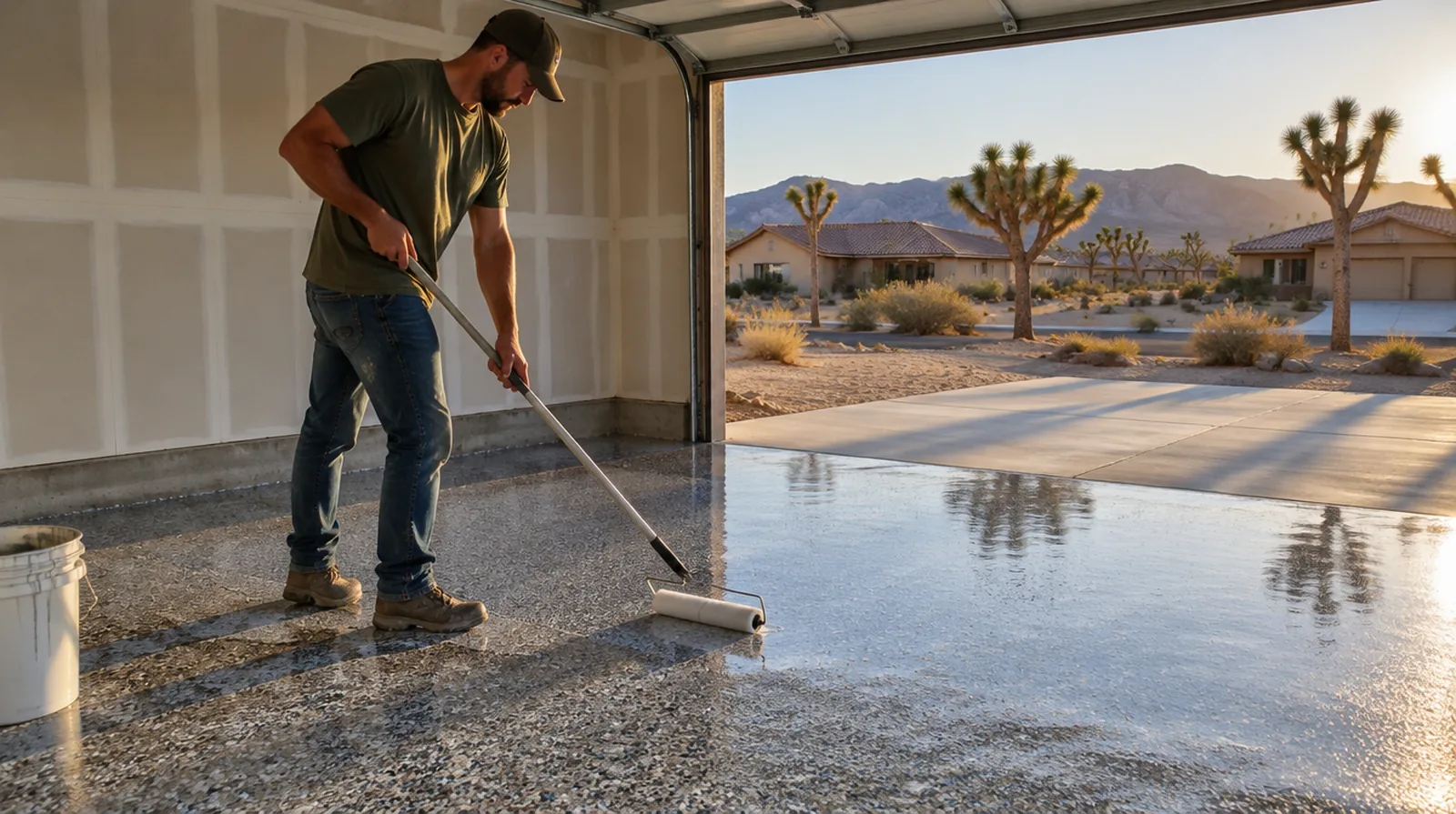
Fast in any season
It cures in cold winter garages where epoxy would stall, and it handles summer heat with careful scheduling.
Sun-stable
It will not yellow from sun through the open door.
One-day install?
Usually.
Cost?
A bit more than epoxy.
Winter installs
On cold days, standard epoxy can take days to cure. Polyaspartic still sets in hours, so winter installs stay on schedule.
Summer installs
We start at dawn to manage working time.
Where it is a smart choice
Garages you use every day, shops that cannot close for long, and any job scheduled in December or January.
Polyaspartic for Hesperia's extremes
Polyaspartic floor coating in Hesperia handles both ends of the high desert climate. It cures at low temperatures, so winter installs are possible, and it resists UV and heat in summer. Many floors are finished in a single day.
Polyaspartic questions
Is it more expensive than epoxy? Material costs more, but the faster install can balance that out.
Can it go over an existing coating? If well bonded, sometimes. Otherwise we grind it off.
Does it handle trucks? Yes, especially with an epoxy base for extra build.
Can it go on a covered patio? Yes, with grit added.
Best uses
West-facing garages, shops with roll-up doors open all day, and anyone who needs a quick turnaround.
A one-day install in the high desert
We start early, grind and repair the slab, vacuum and roll the base with flake. After a short cure we scrape and vacuum loose chips and roll the clear top. In summer we work fast to stay ahead of the heat; in winter we may bring temporary heat to keep the garage in the right range. You stay off it overnight, walk on it the next morning and usually park the following day.
For heavy trucks, an epoxy base coat under the polyaspartic top adds build and impact resistance while keeping the UV stability on the surface. We will explain which version fits your garage and why.
Living with it
Blow out sand often, rinse with water and mild soap, and keep a mat at the door. Wipe up fuel spills quickly. That is all it takes to keep the gloss through many desert summers and cold winters.
Odor
Some smell during install; it clears quickly.
Flake on top
Most of our Hesperia polyaspartic floors include a full chip broadcast.
A cold-morning install, step by step
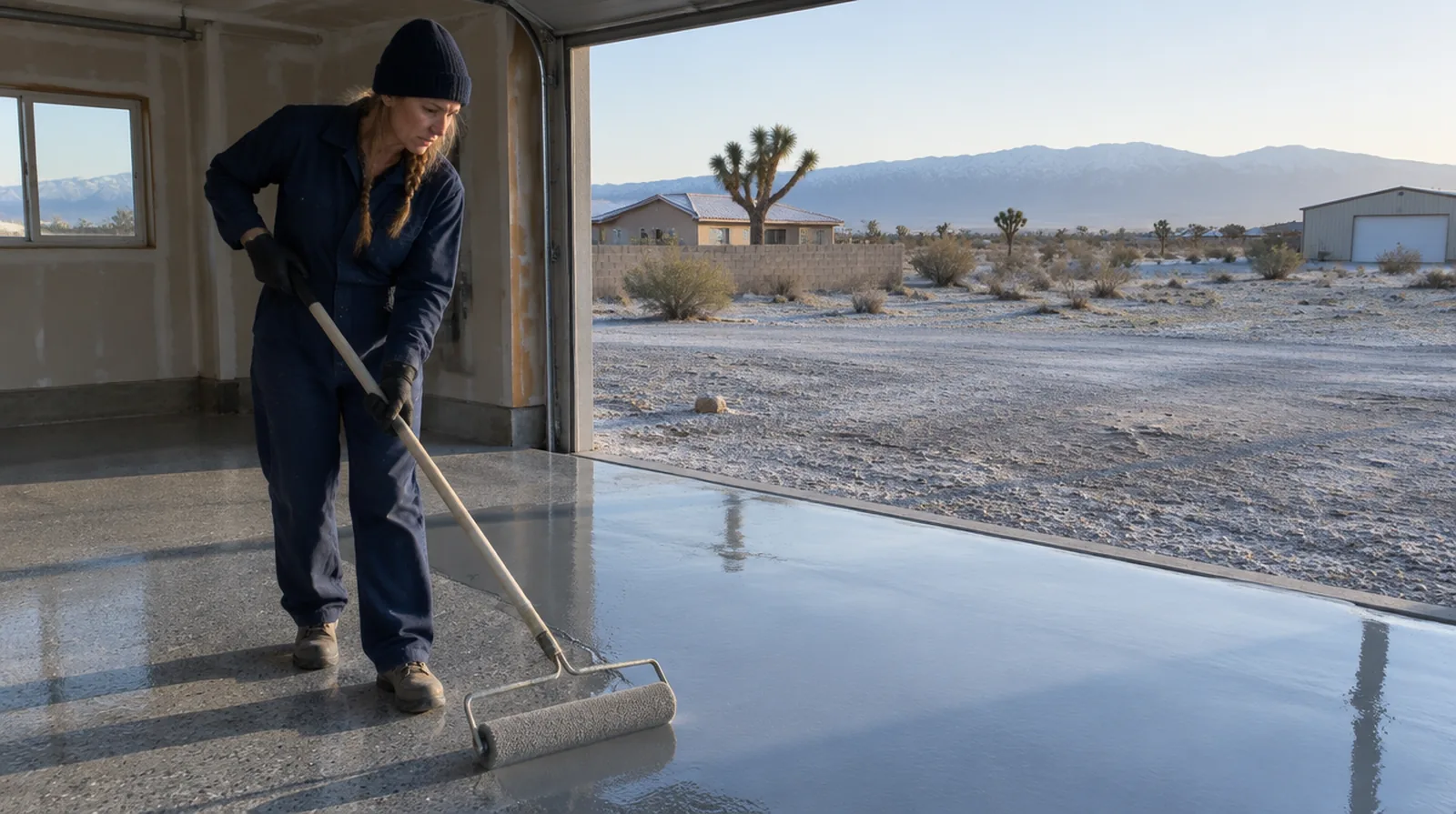
Winter mornings in Hesperia can start below freezing, with frost on the gravel and the slab cold to the touch. Standard epoxy cures slowly or not at all in those conditions. Polyaspartic is one of the few coatings that still cures well in the cold, which makes it a practical choice for December through February.
On a cold-morning job, we arrive early, close the garage door and let the space warm up while we set up. We check the slab temperature and dew point before mixing anything. Grinding and crack repair come first, which also helps warm the surface. Once conditions are right, we roll the base coat, broadcast flake if wanted, and finish with a clear topcoat, all in the same day.
Summer installs
In summer the challenge flips. Polyaspartic cures very fast in heat, so we start early, keep material cool and work in smaller sections. Most garages are finished before the afternoon heat.
Why it suits High Desert garages
Polyaspartic resists UV yellowing and handles big temperature swings well. It is also more abrasion resistant than many epoxies, which helps with the sand that ends up on every floor here.
What to expect on the day
Clear the garage the night before. Expect noise from grinding in the morning and some odor during application. We ventilate with fans. You can usually walk on the floor by evening and park the next day or soon after.
Can polyaspartic go over an old epoxy floor? Sometimes, if the old floor is well bonded. We test and grind first.
Does the wind affect a one-day install? It can, mostly by blowing dust onto wet coating. On windy days we keep the door down, run fans that pull air out rather than in, and seal the gap under the door before the first coat goes down.
Ask about polyaspartic
Call (760) 488-6520.