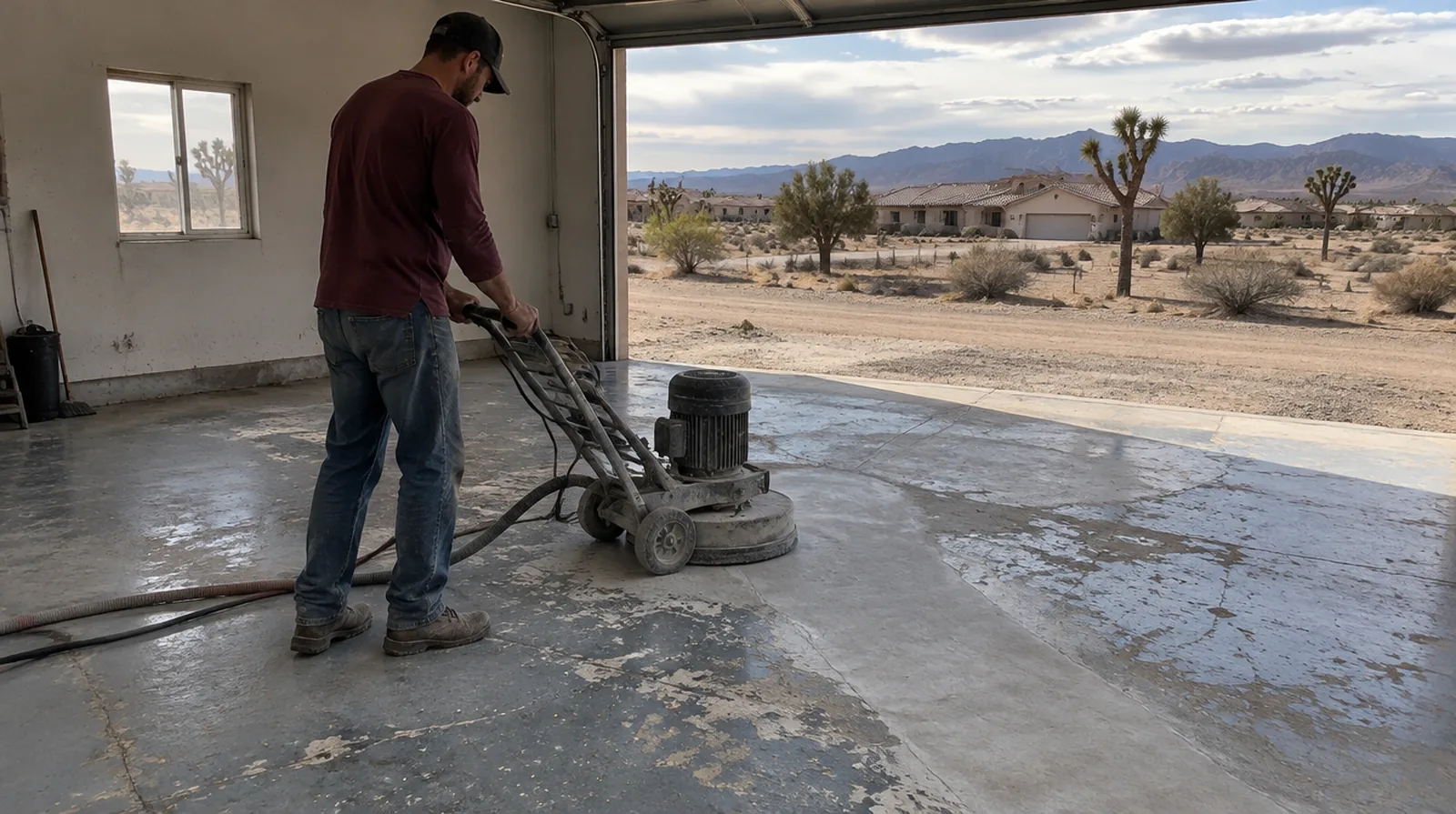
Common issues
Yellowed, peeling or cracked coatings and hot tire pickup.
The fix
Remove failed coating, grind, repair and recoat with a UV-stable system.
Why did it yellow?
Non-UV-stable epoxy topcoat.
Partial repair?
Sometimes.
Wind-blown sand wear
Sand dragged in on tires wears topcoats near the door first. A fresh topcoat restores protection before the base wears through.
Old paint
We remove peeling paint completely and install a bonded system.
What a repair visit covers
We look at whether the failure is the coating, the bond, moisture or the slab itself. You get photos and a written plan, whether that is a spot repair or a full redo.
Freeze cracks
Water that gets under a coating at the door can freeze on a January night and pop the edge loose. We cut back to sound coating, seal the edge and rebuild it.
Fixing floors worn down by the desert
Epoxy floor repair in Hesperia often means dealing with topcoats sanded dull by wind-blown grit, coatings that yellowed in the sun, cracks from freeze-thaw and slab movement, and thin coatings that peeled under heavy truck tires. We also remove old garage paint that has flaked and replace it with a real coating.
How a repair visit works
We test bond strength, mark loose areas and look for the cause. Spot repairs get cut back, ground and rebuilt. Sun-damaged or sand-worn floors can often be saved with a light grind and a new UV-stable topcoat, which costs far less than a full redo.
Repair questions
Why did my floor yellow? Many basic epoxy topcoats amber in UV light. A polyaspartic or urethane top prevents that.
Can you fix freeze cracks? Yes, with flexible fillers that allow some movement.
How long does it take? Usually one to two days.
Keeping a repaired floor in shape
Sweep or blow out sand often, since grit is what dulls a clear coat. Put a mat at each entry and a pad under trailer jacks. Rinse off road salt after winter trips over the pass. These habits keep a repaired floor looking good for years.
Removing failed garage paint
Paint flakes in sun and under tires. We grind every bit of it off before laying a real coating, so the new floor bonds to bare concrete and lasts for many seasons.
Clear coat refresh
A worn but bonded floor can just get a new top.
Hot tire lifting and failed DIY kits
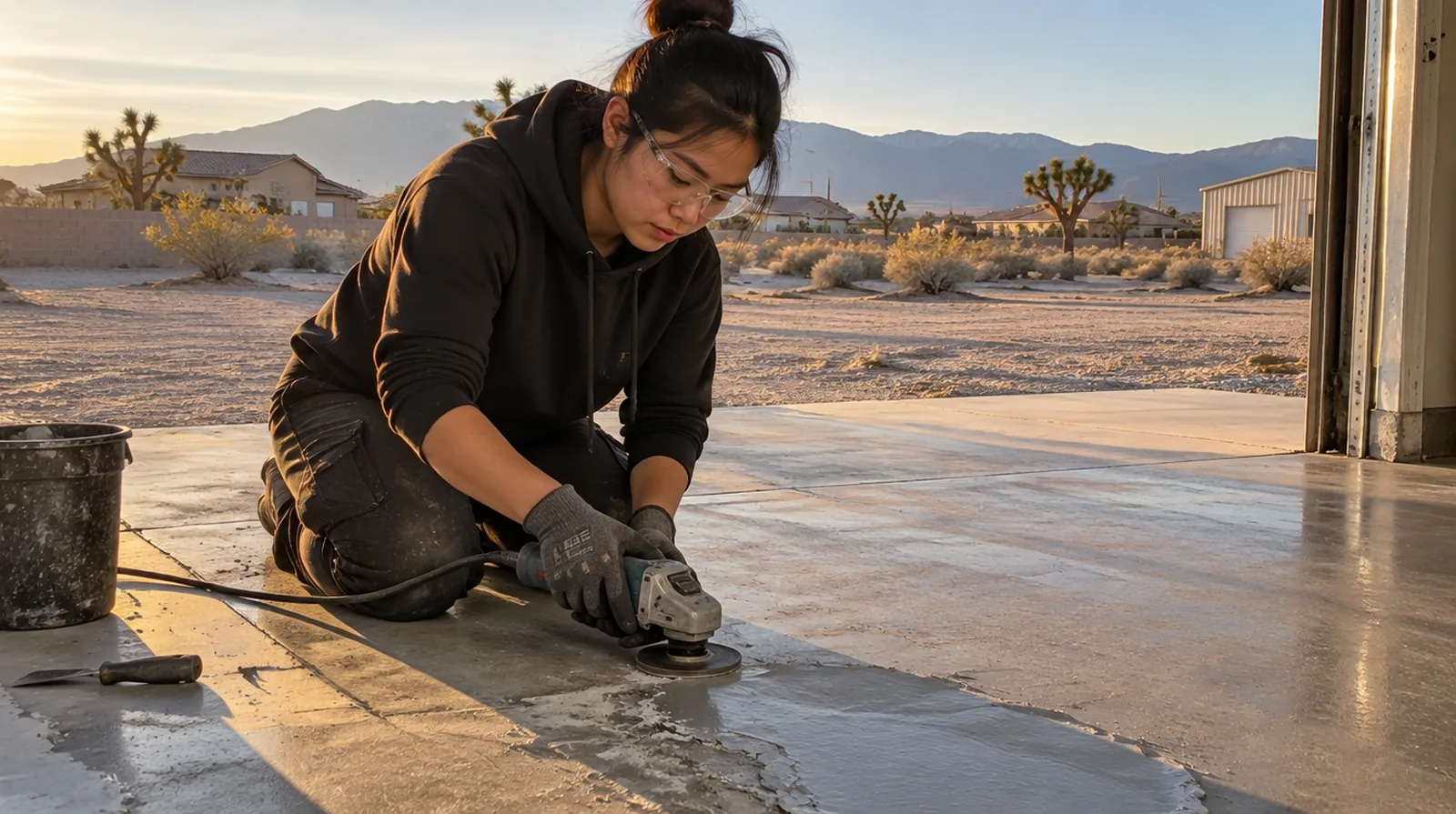
Many of the repair calls we get in Hesperia come from floors coated with store-bought kits or thin one-coat products. Those coatings often look fine at first, then start to lift where hot tires park. In summer, tires heat up on the freeway and the hot rubber softens weak coatings, pulling them off the concrete when the car leaves. The result is bare spots in the tire paths and peeling edges spreading outward.
To repair hot tire lifting, we first remove all loose coating and test the rest. If most of the floor is still well bonded, we grind the damaged areas, feather the edges and rebuild with a proper primer, base and topcoat. If the original coating was too thin or poorly bonded across the whole floor, a full grind and recoat is often the better choice.
Freeze and thaw damage
Winter freezes can cause small cracks and pop-outs in concrete near the garage door, especially where water collects. We fill and repair those areas before recoating.
Wear from sand
Sand tracked in over years wears through topcoats in traffic areas. A fresh clear coat over the existing floor can restore protection if the base is still in good shape.
Our repair visit
We look at the floor, test adhesion, find the cause and explain options. You choose between a spot repair, a recoat or a full replacement.
Can you match a floor from a kit? Often not exactly. We may suggest recoating the whole floor for a uniform look.
Whatever the cause, repairs go better when the slab is clean and dry and the weather is moderate. In the coldest weeks we use fast-curing repair materials, and in summer we schedule repairs early in the day so patches cure evenly and blend with the surrounding floor.
Fix your floor
Call (760) 488-6520.