Why flake suits the desert
Multicolor chips camouflage sand, dust and tire marks. The texture adds grip.
Colors
Desert tans, sandstone, gray and black blends.
Process
Grind, repair, base, chips, scrape, topcoat.
Shops and barns
Flake works well in detached shops and tack rooms.
Will it fade?
Not with a UV-stable topcoat.
How rough?
We adjust texture to your preference.
Cold nights
Chip floors feel less cold underfoot than bare concrete, and the texture helps when snowmelt drips off a truck on the rare winter storm.
Ranch garages
Garages that hold saddles, feed bins and quad bikes get a heavy-duty chip system with extra topcoat for abrasion.
Flake floors for ranch-style garages
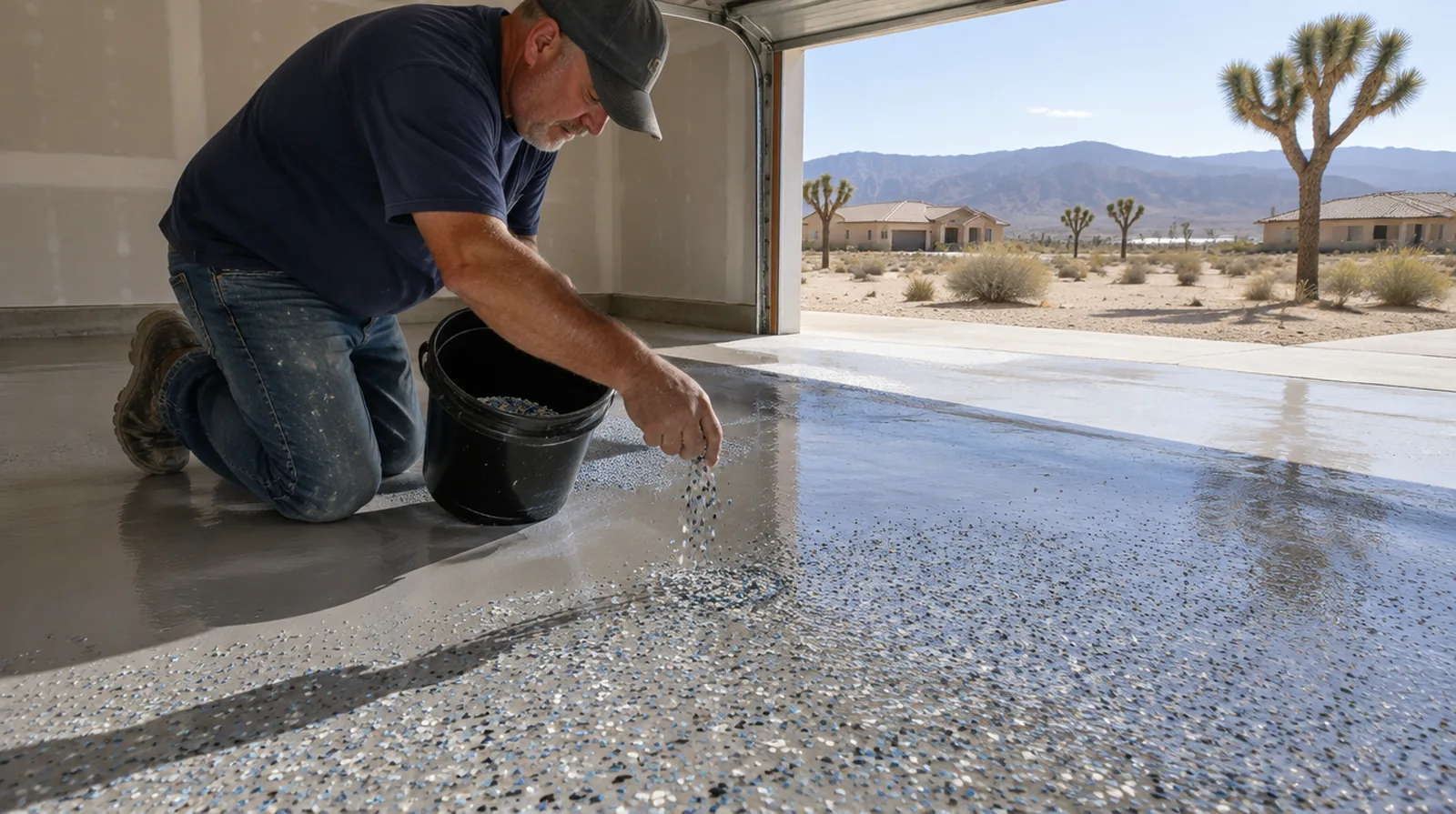
Wind-blown sand, red and tan dirt, truck tires and work boots are part of daily life in Hesperia. A flake floor handles them better than any other finish we install. The multicolored chips hide grit between cleanings, and the texture gives sure footing when snow melts off a truck in winter.
Building flake for heavy use
For garages with work trucks or trailers, we build a thicker base and add an extra clear coat. That gives the floor more resistance to sand abrasion and the weight of loaded vehicles.
Flake questions
Which blend hides desert dirt? Tan, gray and brown blends. We bring large boards to view on site.
Can flake go in a barn or tack room? Yes, and it makes cleanup easier.
Will cold nights affect it? We pick products and schedule work for temperatures that allow proper curing.
Can I pick a smoother finish? Extra clear coats reduce texture.
How a flake floor goes in
On day one we grind, fill cracks and lay the base coat, then throw chips by hand until the base disappears completely. Once it cures, we scrape off any chips standing on edge, vacuum thoroughly and roll on the clear topcoat. The scraping step matters: it removes the sharp points that would otherwise trap sand and make the floor harder to sweep. Most garages take one to two days, with foot traffic the next morning.
Winter footing
When snow melts off a truck and puddles on the floor, flake texture helps. For extra grip near the door, we can add a fine aggregate to the final clear coat so boots stay planted on wet mornings.
Tack rooms, barn aisles and horse property floors
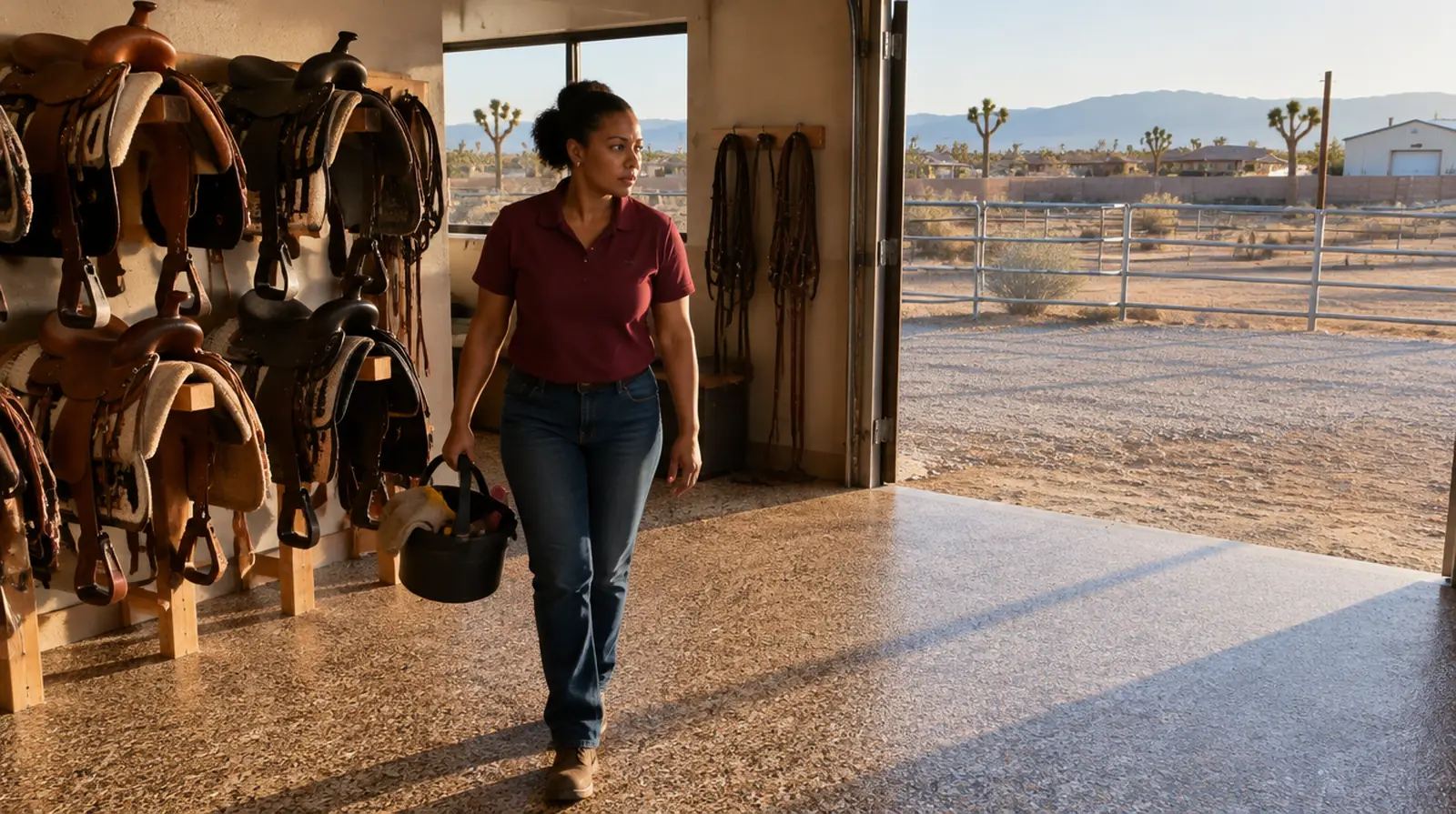
Hesperia has a strong horse culture, especially in Oak Hills, Summit Valley and the larger parcels on the west side. Barns and tack rooms often have concrete floors that are dusty, hard to clean and slippery when wet. A textured flake system makes those floors easier to sweep and hose off, and the added grip helps both people and animals.
For a tack room, we grind the slab, repair cracks and lay a pigmented base with full-broadcast flake. We then apply a clear coat with added texture so wet boots do not slide. Browns, tans and darker blends suit barns well because they hide dust and hay between cleanings.
Barn aisles versus tack rooms
Horse aisles see hooves, which are much harder on a floor than shoes. In active aisles we often recommend a penetrating sealer or rubber mats rather than a thin coating. Tack rooms, feed rooms and wash areas are better candidates for flake.
Cleaning and water
Barns get hosed down. A properly bonded flake system handles water well, but edges and drains need careful detailing. We finish the coating neatly at walls and around drains so water does not get under the edges.
Ranch garages and shops
The same flake system works in ranch garages and workshops that store saddles, feed and equipment. If your property has several buildings, we can coat them in one visit.
Will flake be too slippery for horses? We do not recommend thin coatings for areas where horses walk regularly. For tack rooms and people areas, texture makes the floor safer.
Can flake be used in a wash rack? It can, but the area needs good drainage and an aggressive texture. We look at the setup first.
Pick your chips
Call (760) 488-6520.